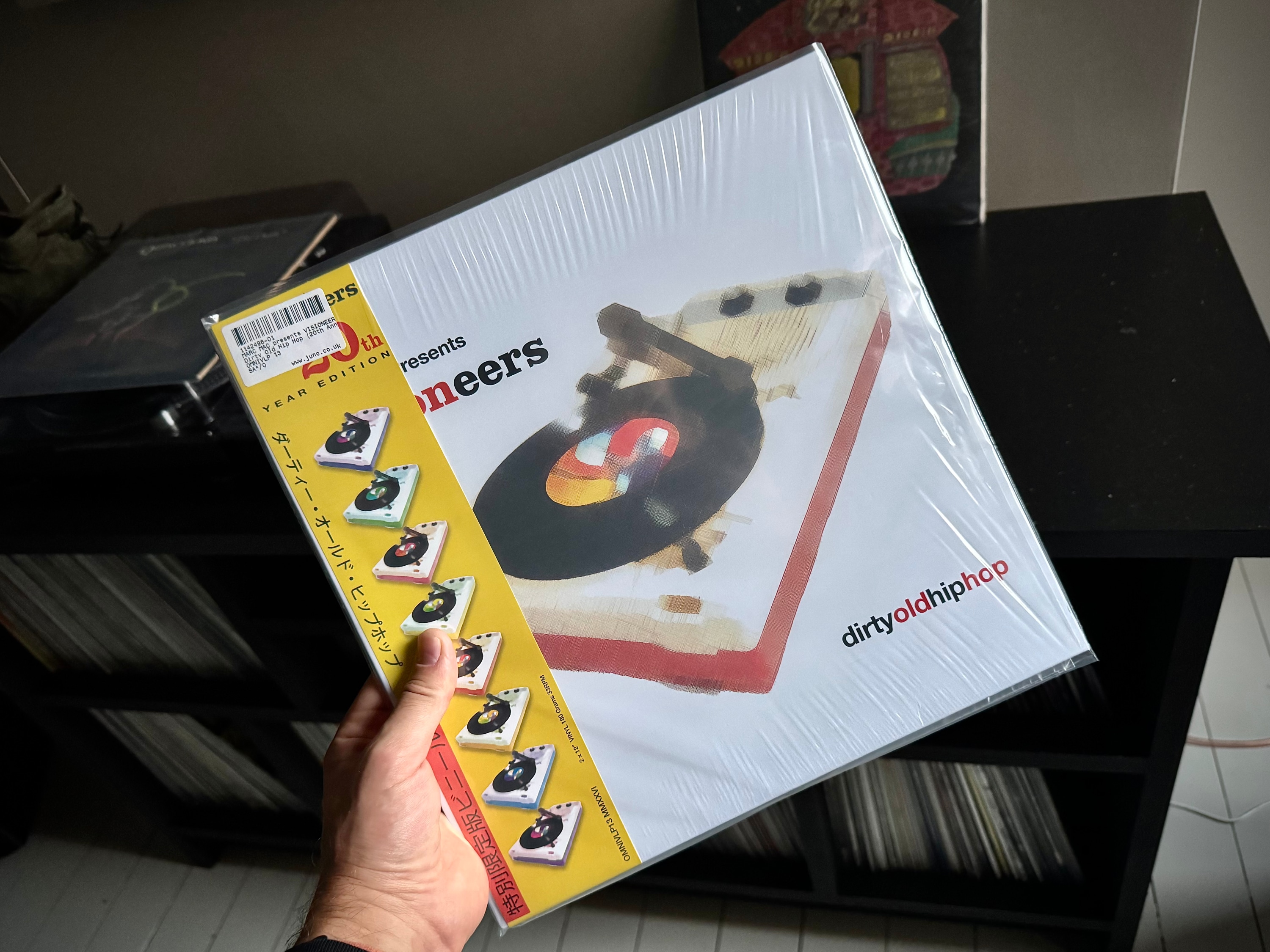
It was a good month for me. Very productive, slower than usual. When the rest of the world races, folks go faster, produce more than ever with all these modern tools, I find more joy in doing precisely the opposite.
Content Preview
It was a good month for me. Very productive, slower than usual. When the rest of the world races, folks go faster, produce more than ever with all these modern tools, I find more joy in doing precisely the opposite.
My friend inspired me to re-watch a decades-old conference talk about programming, and surprisingly I found it more relevant than ever before. That inspired me to re-watch some classic old talks about our craft, and below you will find a few of them. The past month was also full of good resources and discussions around the web that I found super insightful. I hope you will like the collection I put together for you this month. As usual, the album of the month for you first, and a stack of links later. Go!
Album of the month
Let me tell you a story. I was listening to some music while cooking a breakie for the family the other day. My 3-year-old daughter came down from her bedroom, paused for a moment next to the speaker and asked.
“Dada, Nina Simone?”
My heart melted and the pride I felt that exact second is hard to describe. My little angel who can barely count to five knows who Nina Simone is. All these music listening sessions and dancing every evening were worth it. The exact song that was playing at that moment was a beautiful song called “Baltimore” (listen to
“Baltimore” by Nina Simone on YouTube
). Even though Nina’s version of this song is by far the most popular, the original was made by Randy Newman in 1977. Beautiful song! Probably no surprise that the album from my collection that I would like to recommend you this month is
“Baltimore” by Nina Simone
.
PS. If you cook without music, you live your life wrong. A good speaker in the kitchen is essential. And in the bathroom. And the living room. Every room. The garage too!
I’m glad to see more folks being excited about this, in my opinion super underappreciated, CSS units. The
lh
and
rlh
map to the size of the line height in relation to the current element and the root respectively. This is by far the best way to achieve balanced typography in CSS but as you can see in Ahmad’s post, there are plenty of other use cases for it. I also published a piece about three years ago.
“Vertical rhythm using CSS lh and rlh units”
give it a go if vertical rhythm on the web is something you care about.
Anton Zhiyanov published a bunch of classic blog posts that covered all the new Go releases. It was my favourite way of exploring new things in the language for the past few years. Unfortunately,
Anton decided to stop
, as it started to feel more like a chore rather than a fan project. Luckily, the folks from VictoriaMetrics decided to continue the tradition, and they just published a post about the upcoming Go 1.27 release. It is full of great additions to the language: generics on methods, JSON v2 enabled by default, a built-in UUID package, and plenty more. Thank you for this write-up.
This one is my favourite kind of posts. Lea Verou dives deeply into the user psychology behind the two and three states theme switches. She advocates for the smarter way of programming two-state appearance mode toggles and gives plenty of good reasons against the popular solutions that add third explicit options for adopting system preferences. I’m not fully convinced by her methodology, but nonetheless this is a really good read.
What a brilliant idea. It is shocking that this thing is becoming a reality only now, in 2026. If you want to sell a domain name, just add a
_for_sale
DNS record. Brilliant!
Fonts contribute a lot to the overall weight of your web project. In this post, Chris reminds us about the system font that often may be more than enough. The default macOS San Francisco font is actually a variable font, and you can go pretty crazy using only this one and nothing else.
One of these talks that I keep coming back to every few years, and every time I watch it I have a feeling that it becomes increasingly more relevant. In the age of AI tools that generate code for programmers, it is so easy for an additional complexity to slip into our project, and the thing is not always immediate to spot. This talk is a good reminder about the correlation of “simple” and “reliable”. If you have never watched this talk, today is the day you should hit the play button.
On a similar vein, this is a classic blog post that is over a decade old. A little reminder that goes so well with the “Simple Made Easy” talk. The more I’m a part of this industry, the more I appreciate boring tech. At the same time, I care less and less about shiny new things, and I apply a lot more aggressive filters to the industry news I dedicate any time to. Again, if you have never read this one, brew a coffee now and give it a go.
This is the counterargument to Lea’s post by Bramus. Both posts are very good, and they present two very different points of view, but the prioritisation of explicit user control advocated by Bramus is closer to my preference. I really like this blog post response to another blog post that went viral in the industry.
A great presentation of the results that Scott collected on the effect of AI-assisted coding on mental health. Not only dry facts, but also practical advice from psychology experts and some snippets from the interviews with burnt-out developers. If you use any level of AI coding in your day-to-day, this can serve as a good warning. The production quality is, as always, second to none, but at this point, I would expect nothing else from the Syntax folks.
I recently had a discussion with some of my tech friends on the
NN1 Dev Club
Discord server about the tech talks that aged well. The one mentioned above by Rich Kickey was, of course, my recommendation, but my friend Rob recommended this one by Paul Adams presented at UX London 8 years ago. This talk aged very well, and other than some obsolete tools at this point, this talk is probably more relevant now than it was back then. If you can think of some old tech talks that aged well, please send them my way!
Now when you install Buf CLI, it comes with an LSP server that you can hook into your favourite editor and enjoy a much nicer experience while working with protobufs. That was the missing piece from the official bundle. Protobufs are my favourite way of communication between backend services, and this not only simplifies my tooling to work with it but also makes it more powerful than ever.
A little AI slop warning before you click this one, because it feels like something mostly AI-generated and I think authors should make it a little bit more personal. It is still a very useful collection of explainers related to profiling the performance of your web project. It is a miles-long page and probably reading it from top to bottom is not the way, but skim through the headings and explore the subjects that you don’t fully grasp. I learned a ton using it.
This is a relatively small release compared to some past Go releases, but version 1.27 of my favourite programming language adds quite a few things that I’m really excited about. Generics on methods, more strict JSON encoding, and finally UUID built-in in the standard library. The
“Go 1.27 Release Notes”
go more in depth about every new feature.
End of July? Seriously? Feels like yesterday when I celebrated New Year’s Eve, and all of a sudden it is the end of July. Can we all slow down a little, please? Not a little. Slow down! You, time, the world. Pretty please! I’m in a good mood today, but not in a good one to write interesting intros, so let’s go straight to the album of the month (it is a good one), and of course links. I have plenty of good resources for you that I liked over the past month. Enjoy!
Content Preview
End of July? Seriously? Feels like yesterday when I celebrated New Year’s Eve, and all of a sudden it is the end of July. Can we all slow down a little, please? Not a little. Slow down! You, time, the world. Pretty please! I’m in a good mood today, but not in a good one to write interesting intros, so let’s go straight to the album of the month (it is a good one), and of course links. I have plenty of good resources for you that I liked over the past month. Enjoy!
Album of the month
Time for a classic! I have two reasons why
“The Score” by Fugees
was spinning quite a lot on our turntable in the past month. Firstly, this is an incredible album full of bangers, one after the other. Another reason is that my wife and I are going to see Lauryn Hill and Wyclef Jean live in a few weeks’ time at the
Diaspora Calling
festival and we are expecting to hear quite a few songs by refugees. I’m well pumped about it. If you don’t know this album, you have homework to do, because this is one of the greatest pieces of music ever released.
I like posts about modern parts of CSS, but posts like this one are even better. Jake presents a tonnes of modern CSS to solve a particular UI challenge — adding margins and restricting block size of customizable selects. Along the way he also bumps into number of browsers incompatibilities. Again, it is packed with modern CSS like
position-try-fallbacks: flip-block
and other nuggets you probably never heard of. This is the best kind of blog posts!
Really good primer to the
go fix
CLI and the concept of modernizers in the Go language. The command line tool has been totally revamped in the recent major version 1.26 and it is an incredibly useful tool for projects managed by a team of multiple devs. Surprisingly, it is also very useful for codebases written using AI, even though modern LLMs are pretty good at writing Go.
I was so excited when the Microsoft team announced the TypeScript rewrite to Go over a year ago. For many months, I have been using
tsgo
, and the difference in the experience of working with this language is night and day. The part that I’m most excited about, other than the speed, of course, is the native LSP integration that fully follows the protocol spec. If you have ever complained about the TS compilation speed, today is the day when the wait is over. Update your projects and your IDEs to take full advantage of it.
I know that there are plenty of other resources that explain the new possibilities of fully customisable HTML select elements, but there is something different about this Apple production. This presentation is not too long, not too short, follows a nice pace and the constructs are layered on top of each other, so we are not bombarded with the complexity of new values and features all at once.
This is a good guide on creating a web browser extension. The chapter closer to the end of this presentation is the most exciting to me, as it presents how you can package and distribute a Safari extension without ever downloading Xcode. This is exciting news and probably will unblock a lot of authors from distributing their plugins to Safari as well.
Really inspiring talk by Daniel about building successful products with people. It is backed by the origin story of npmx, which is one of the most successful open source stories in recent times. I love the way Daniel always puts people first in the way he works.
OpenTelemetry is an open-source framework to enable key observability elements in your application. It is a single framework that gives you logs, metrics, and traces, and it supports a lot of modern programming languages. Adding it to a Go application has never been simple, though. It required a lot of boilerplate code to propagate logs, hook into the transport layer events, and orchestrate spans for database calls, etc. Now this whole thing can go away, and we no longer need to write it all, as the new
otelc
CLI is a tool that can auto-instrument our application at compile time. The best code is the one that doesn’t exist, right?
I had absolutely no clue about the CSS
progress()
function. This article presents one great use case for the new function, but I can think of plenty more good ones. Isn’t modern CSS just too good?!
Good post about the goals of Gin, the most popular HTTP Go language framework. The author elaborates on the importance of backward compatibility, how the radix tree-based router made it a lot more efficient compared to other regex-based projects of its kind, and some other decisions that made it as popular as it is. Really good, short write-up with an interactive radix tree explainer.
What a good write-up. Learning new things is probably your bread and butter if you work in the software engineering sector, but some people may need this reminder. It is really useful for people who claim not to have time for anything, and even more applicable to those who didn’t train their self-improvement muscle since their school years.
I really like Cloudflare’s intuitive, headers-controlled advanced caching. This is the thing that I always wanted to be available in Cloudflare Workers, and the wait is over. This blog post starts from the basics and goes into depth about the reasoning why this implementation took so long. It is such an interesting story how the web changed and the core Worker methodology flipped the order of resources (moved the cache in front of the origin).
Just read it. It is not about a specific tool, and Bill’s point is not to compare one to the other. It is about core principles of building a product that people want to use. The whole post, line by line, is a masterpiece and I would highly recommend reading it regardless of what the output of your creation is: a website, CLI tool or programming language. It applies to all those.
Maximal configurability shouldn’t be a tool’s goal, it should be an option for when it’s actually necessary. Designing an ergonomic tool is fundamentally about having good defaults, while still allowing escape hatches where they’re possible/needed.
“Highly configurable” is often just an excuse for shipping no opinion at all and calling the resulting work your problem. Good defaults are a form of respect for the user’s time: the toolmaker does the thinking once so a thousand users don’t each have to.
Documentaries by CultRepo are incredible, and another one has joined their collection recently, this time about the Java programming language. A language that I have absolutely no clue about, but that actually makes this a more interesting documentary for me. As always, top production quality and a superbly interesting story. Hey, modern Java doesn’t really look as verbose as it looked a decade ago when I looked into it for the first time.
Do I really need to highlight every single post by Josh in my top picks? Yes, I do, because they are great explainers of modern CSS concepts. His demos and very practical examples are always on point to convey just enough without exhausting my brain capacity.
Super simple to follow intro to the interactive rebasing. I’m not scared of
git rebase -i
but I use it so infrequently that every time I use it, I need to remind myself where to put “s” to squash one commit onto the other. I really like this refresher.
This episode of Syntax.fm answered so many questions I had about AT Protocol and a little bit about how it compares to something like the Fediverse (the concept behind Mastodon). Dan is a great educator and some of the concepts he explained finally clicked in my brain. After chatting about it on social media, Dan shared with me
“There Are No Instances in atproto”
that goes much deeper into the comparison of AT Protocol and the Fediverse. I think I’m becoming a fan, but there is still one knowledge gap in my understanding, and I have a blog post coming precisely about that. There is no better way to learn something than writing about it. Right?
There is no other web service that I have been using more throughout my career other than my email. Second is CodePen. This is a huge milestone that the whole team spent years to achieve and the whole, super small team deserves huge kudos. The new CodePen 2.0 is a lot more powerful, comes with all you would expect from a very modern service of its kind, but in a typical fashion for these folks, they kept it simple. To use its basic features it is as simple as it always has been, but now you can do serious development work with it including a whole deployment of your website, which is absolutely sick. I also enjoyed two episodes of the CodePen Radio podcast, that I would highly recommend you checking if you are curious about some internals:
“Why are we building CodePen v2”
and
“CodePen 2.0 Launch Party! Find out what everyone’s favorite features of CodePen 2.0 are”
. Huge congrats team!
Pretty big month for the web. Tons of great posts came out, Apple WWDC took place and a few shocking acquisitions happened as well. I have been travelling for work and with family this month a lot so no other crazy updates from my personal life this month, but as always great music recommendations for you all and a bunch of links. We freaking love good links right! Enjoy!
Content Preview
Pretty big month for the web. Tons of great posts came out, Apple WWDC took place and a few shocking acquisitions happened as well. I have been travelling for work and with family this month a lot so no other crazy updates from my personal life this month, but as always great music recommendations for you all and a bunch of links. We freaking love good links right! Enjoy!
Browsers ship with a long list of quirks, just to make sure a rendering is consistent with the dominant player, Google Chrome. Due to the significant market share dominance, Google’s browser doesn’t have a quirk mode. This is pretty shocking, and I would encourage you to look into the list of quirks. In some situations, Safari and Firefox literally modify the browser agent. A really nice deep dive by Den.
Declan is one of my favourite bloggers in recent years. The subjects that he picks are just so close to my heart. No matter if this is about the open web, accessibility or Neovim, I love his writing. This one is no different and it is a good reminder that when we talk about assistive technologies, it is not only about the screen reader. The list of input and output devices in this list is a real eye-opener, and it is non-exhaustive.
I love Ben and his never-ending advocacy to just use the web. This one is another great post by him that gives you six million reasons why you should consider the HTML
<dl>
element in your markup. I’m sure plenty of unordered lists (or divs if you’re a horrible person) can be replaced with details lists. Great semantics improvement and a good win for accessibility.
I recently spent hours trying to understand the order of transitions and animations of the top level HTML elements like
dialog
s and
popover
s. Shit is complicated! Only when I managed to make it work, Chris published that article that made me actually understand these things. Chris builds this mental model of three distinct states and puts them in the timeline. This is the top explainer of the in and out animations of
dialog
s folks.
VoidZero, a company founded by the creator of the Vue framework, now holds the most powerful suite of tools in the JavaScript ecosystem: Vite, Vitest, Rolldown, and the Ox set of tools (linter, formatter, parser and so on). Now it becomes part of CloudFlare, a company that I’m a huge fan of, but at the same time I’m a little scared that they own all the tools I like. Not long ago, they also acquired Astro. I really hope that CF won’t become a bad player and that they will fulfil the promise of continuous openness and development under the current licence for all these apps.
There is a cool feature coming to Postgres 19. Read-after-write removes the need for the age-old hack of querying the data after writing it with a delay in between to accommodate replica delays. Redowan explains it really well.
What a hot tip. I had no idea I can make a global
.config/git/ignore
file to never again deal with the annoying macOS
.DS_Store
files. Short one, good one.
Ain’t that golden? Literally a whole website with a cool domain (I love short, single-purpose, even silly domains) dedicated to all I have been moaning about for the past years since the AI-generated slop explosion happened. Love it, read it, apply it and keep the human conversation going.
Good explainer of the new
ariaNotify()
and the overall state of assistive technology announcements of live regions. Mat Marquis presented a few practical examples, two ways of triggering new notifications and left us with a fair warning not to abuse this API.
Here is a helpful little cheat sheet about new
grid lanes
display layouts (aka masonry) created by the WebKit team. Not only does it explain and present cool demos of the new feature, but it also explains in a really nice way other core aspects of layout sizing methods. For years I struggled to wrap my head around the
min-content
and
max-content
keywords, but this little guide nailed the definitions. I like little single-purpose pages like this one.
Standard.site came out of nowhere some time ago, and a bunch of bloggers integrate their blogs with the new lexicons on the ATProto (Authenticated Transfer Protocol is the tech behind BlueSky). I read a few of the guides, and as much as the implementation makes sense to me, the part I was missing is the basic understanding of the ATProto concepts needed for the integration. This article by Declan “Vale” Chidlow is just perfect. It goes into the very basics of the concepts and presents just the essential parts needed for the integration. What a good blogger he is!
What a great story by Marcin of the little decades-old keyboard quirk that made typing “S” a little bit more problematic for Polish keyboard users. As you could expect from his post, it is packed with obscure details about the keyboard’s design and little-known history facts behind the editor’s inner workings.
This year Apple invested more time into the improvements other than new features across the board of all OSs, which was a general theme of this year’s WWDC. Safari is no different and the huge focus went into the interoperability of Safari with other engines. But a few brand new things landed of course — grid lanes and customisable selects are probably the highlights most are talking about. For me, the changes to the web extensions and the way to package them up in Safari are the most noticeable changes. This 16-minute session with Jen Simmons sums it up really nicely.